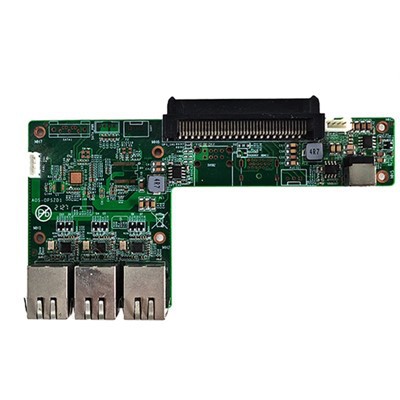
Hey there! As a supplier of Transfer Panel Additive OPS (Open Pluggable Specification) Computers, I often get asked a bunch of questions. One of the most common ones is, "Can the Transfer Panel Additive OPS Computer run Windows?" Well, let's dig into this topic and find out.
First off, let me give you a bit of background on what Transfer Panel Additive OPS Computers are. These are nifty little devices that are designed to be plugged into compatible displays. They're super handy because they can turn a regular display into a smart, interactive one. They come in different shapes and sizes, and they're used in all sorts of settings, like digital signage, kiosks, and educational institutions.
Now, onto the big question: Can they run Windows? The short answer is, in most cases, yes. But there are a few things you need to consider.
Hardware Compatibility
The first thing you gotta think about is hardware compatibility. Windows is a pretty demanding operating system, and it needs a certain level of hardware power to run smoothly. Most Transfer Panel Additive OPS Computers are built with different types of processors, memory, and storage.
For example, if you're looking at an I3 6100U/I5 6200U/I7 6500U CPU MINI Computer 4GB DDR4 2133MHz Computer, these have decent processors and memory. The Intel Core i3, i5, and i7 series are well - known for their performance, and they can handle Windows pretty well. Windows 10, for instance, requires at least a 1GHz processor, 1GB of RAM for the 32 - bit version, and 2GB for the 64 - bit version. With 4GB of DDR4 memory, these mini - computers have more than enough to run Windows 10 without too many issues.
However, if you have an older or less powerful OPS computer, it might struggle. Some of the lower - end models might have processors that are just too weak to handle the multitasking and resource - hungry nature of Windows. You could end up with a slow, laggy system that's frustrating to use.
Drivers and Software Support
Another important factor is drivers and software support. Windows needs specific drivers for all the hardware components in your OPS computer to work properly. This includes things like the graphics card, network adapter, and storage devices.
Most of the well - known hardware manufacturers make sure their products are compatible with Windows and provide the necessary drivers. But sometimes, you might run into issues, especially if you have a custom - built or less common OPS computer. In such cases, you might have to spend some time searching for the right drivers or even contact the manufacturer for support.


Some Transfer Panel Additive OPS Computers are designed with a focus on other operating systems, like Android. Take the RK3399A Touch Panel Android Motherboard. This is mainly built for Android, and getting Windows to run on it could be a real challenge. You'd have to find drivers that are compatible with the RK3399A chipset, which might not be readily available.
Licensing
Licensing is also a big deal. Windows is a proprietary operating system, which means you need to have a valid license to use it legally. When you're considering running Windows on your Transfer Panel Additive OPS Computer, you need to make sure you have the right license.
There are different types of Windows licenses, like Home, Pro, and Enterprise. The type of license you need depends on how you're going to use the computer. For example, if it's for personal use or a small business, the Home or Pro version might be enough. But if you're using it in a large corporate environment, you might need the Enterprise version.
Performance Considerations
Even if your OPS computer can technically run Windows, you need to think about performance. If you're using the computer for simple tasks like web browsing and word processing, most OPS computers with decent hardware can handle it just fine. But if you're planning to run more resource - intensive applications, like video editing or 3D gaming, you might run into problems.
The SOH310B Whiskylake Touch Display OPS - C Computer is a bit more powerful and might be better suited for more demanding tasks. It has a newer processor and better graphics capabilities, which can give you a better experience when running Windows applications.
Installation Process
Installing Windows on a Transfer Panel Additive OPS Computer is similar to installing it on any other computer. You'll need to create a bootable USB drive with the Windows installation files. Then, you'll have to enter the BIOS or UEFI settings of your OPS computer to set the USB drive as the boot device.
During the installation process, you'll be asked to choose the type of installation (clean install or upgrade), select the partition where you want to install Windows, and enter your product key. It's a fairly straightforward process, but you do need to be careful and follow the instructions carefully.
Benefits of Running Windows
There are several benefits to running Windows on your Transfer Panel Additive OPS Computer. First of all, Windows has a huge software library. You can find almost any type of software you need, from productivity tools like Microsoft Office to entertainment applications.
It's also widely used in the business world. If you're using your OPS computer in a corporate setting, having Windows installed can make it easier to integrate with other systems and networks. And since most people are familiar with Windows, it's easy to train new users.
Drawbacks of Running Windows
On the flip side, there are some drawbacks. Windows is known for being a bit resource - hungry, as I mentioned earlier. It can slow down your computer, especially if you have a less powerful OPS computer.
Security is also a concern. Windows is a popular target for hackers, so you need to make sure you have proper security software installed, like antivirus and firewall programs. This can add an extra layer of complexity and cost.
Conclusion
So, to sum it up, most Transfer Panel Additive OPS Computers can run Windows, but it depends on a few factors like hardware compatibility, drivers, licensing, and performance requirements. If you have a decent - spec OPS computer and you're willing to deal with the licensing and security aspects, running Windows can be a great option.
If you're interested in purchasing a Transfer Panel Additive OPS Computer and want to know more about its Windows - running capabilities, or if you have any other questions, feel free to reach out. We're here to help you make the right choice for your needs. Whether it's for a small business, a large corporation, or an educational institution, we've got the expertise to assist you in finding the perfect OPS computer for Windows or any other operating system.
References
- Microsoft Windows System Requirements Documentation
- Hardware Manufacturer Specifications for OPS Computers