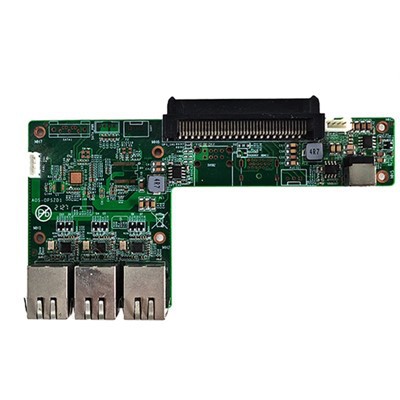
Hey there! As a supplier of OPS Computer Adapter Boards, I often get asked about the power consumption of these little wonders. So, I thought I'd take a few minutes to break it down for you.
First off, let's talk about what an OPS Computer Adapter Board is. For those who aren't in the know, it's a standardized, hot-swappable computer module that's commonly used in digital signage, kiosks, and other embedded computing applications. It's designed to be easily integrated into a display or other device, providing a powerful and flexible computing solution.
Now, onto the main topic: power consumption. The power consumption of an OPS Computer Adapter Board can vary quite a bit depending on a few different factors. Let's take a look at some of the key things that can affect how much power these boards use.
Components and Their Impact on Power Consumption
One of the biggest factors influencing power consumption is the components that are installed on the board. For example, the processor is a major power consumer. High-performance processors like the Inteli3 - 8100 Processor Computer Independent Graphics Card GTX 730 2GB GTX 1050Ti 4GB GTX 2080 8GB Etc will generally use more power than lower - end ones. These high - end processors are designed to handle complex tasks such as gaming, video editing, and running multiple applications simultaneously. So, if you're using an OPS board with a powerful processor, you can expect it to draw more power.
The graphics card is another important component. A dedicated graphics card like the ones mentioned above can significantly increase power consumption. The more powerful the graphics card, the more electricity it needs to operate. In contrast, an integrated graphics solution will typically use less power, but it may not be suitable for applications that require high - end graphics performance.
Memory also plays a role. More RAM generally means more power consumption, especially if you're using high - speed memory modules. However, the difference in power usage between different amounts of RAM is usually not as significant as that between different processors or graphics cards.
Usage Patterns
How you use the OPS Computer Adapter Board also affects its power consumption. If the board is constantly running resource - intensive tasks, like running a 3D game or encoding high - definition video, it will use more power than if it's just sitting idle or performing simple tasks like displaying text or running a basic web browser.
For example, if you're using an OPS board in a digital signage application where it's just displaying static images or a simple video loop, the power consumption will be relatively low. On the other hand, if it's used in a kiosk that offers interactive 3D product demonstrations, the power usage will be higher.
Power Supply Efficiency
The efficiency of the power supply unit (PSU) is another factor. A more efficient PSU will convert the incoming AC power to DC power with less loss, meaning that less power is wasted as heat. This can result in overall lower power consumption for the OPS board. When choosing a power supply for your OPS board, it's a good idea to look for one with a high efficiency rating.
Typical Power Consumption Ranges
So, what are the typical power consumption ranges for OPS Computer Adapter Boards? Well, it's hard to give an exact number because of all the variables we've discussed. But generally speaking, a basic OPS board with a low - power processor and integrated graphics might consume around 10 - 20 watts when idle and up to 30 - 40 watts under heavy load.
On the other hand, a high - end OPS board with a powerful processor and a dedicated graphics card could consume 50 - 100 watts or more when under full load. For example, a board with a CPU Core I5 - 3320M Player Box Six Groups Of USB Player Boxes and a mid - range graphics card might fall into this higher power consumption range.
Measuring and Monitoring Power Consumption
If you're interested in accurately measuring the power consumption of your OPS Computer Adapter Board, there are a few ways to do it. You can use a power meter, which is a simple device that you plug between the power source and the OPS board. This will give you real - time information about how much power the board is using.
Some advanced OPS boards also have built - in power monitoring features. These can provide detailed information about power usage over time, which can be useful for optimizing your system's energy efficiency.
Importance of Power Consumption Considerations
Understanding the power consumption of OPS Computer Adapter Boards is important for several reasons. First of all, it can help you manage your energy costs. If you're running a large number of OPS - powered devices, even a small reduction in power consumption per device can add up to significant savings over time.
Secondly, it's better for the environment. Using less electricity means reducing your carbon footprint. As more and more companies are looking to be more environmentally friendly, choosing OPS boards with lower power consumption can be a great way to achieve this goal.
Finally, it can also impact the lifespan and reliability of your equipment. Excessive power consumption can lead to more heat generation, which can cause components to wear out faster. By keeping power consumption in check, you can potentially extend the life of your OPS boards.
Our Product Offerings and Power Efficiency
At our company, we offer a wide range of OPS Computer Adapter Boards, including those with different power consumption profiles. For example, our Intel Processor Embedded Board 10x10 Embedded Board is designed to be energy - efficient while still providing good performance. We understand the importance of balancing power consumption and performance, and we work hard to ensure that our products meet the needs of our customers.
Whether you're looking for a low - power solution for a simple digital signage application or a high - performance board for a demanding kiosk or gaming setup, we've got you covered. We can also provide you with detailed information about the power consumption of each of our products, so you can make an informed decision.
Contact Us for More Information
If you're interested in learning more about our OPS Computer Adapter Boards or have any questions about power consumption, we'd love to hear from you. Whether you're a small business owner looking to set up a few digital signage displays or a large corporation in need of a custom - designed embedded computing solution, we can work with you to find the right product for your needs.
Feel free to reach out to us to start a conversation about your requirements. We're always happy to help you choose the best OPS board for your application and provide you with all the information you need to make a smart purchasing decision.


References
- General knowledge of computer hardware components and their power consumption characteristics.
- Industry reports on the performance and power usage of OPS Computer Adapter Boards.