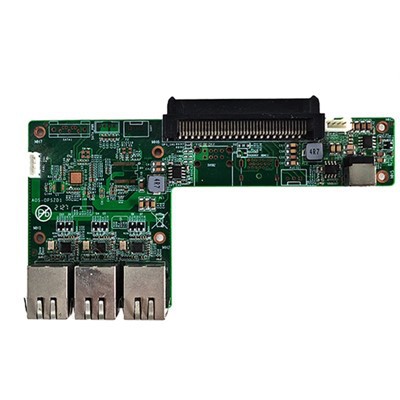
Hey there! As a supplier of Transfer Panel Additive OPS Computers, I often get asked about the power consumption of these nifty devices. In this blog, I'll break down what you need to know about the power usage of Transfer Panel Additive OPS Computers, and why it matters for your business.
First off, let's quickly go over what a Transfer Panel Additive OPS Computer is. It's a compact, high - performance computer module that can be easily integrated into various display systems, like digital signage or meeting boards. It provides the computing power needed to run applications, play media, and handle data processing, all in a small form factor.
So, what's the deal with power consumption? Well, power consumption is a crucial factor for several reasons. For one, it directly impacts your electricity bills. If you're running multiple OPS computers in a large office or a public venue, even a small difference in power usage can add up to significant savings over time. Additionally, lower power consumption is better for the environment, reducing your carbon footprint.
The power consumption of a Transfer Panel Additive OPS Computer can vary depending on several factors. The first and most obvious is the hardware components inside the computer. Just like with any regular computer, more powerful processors, larger amounts of RAM, and high - end graphics cards will generally consume more power. For example, if you opt for a high - end UHD OPS Computer for Meeting Board UHD OPS Computer for Meeting Board that's designed to handle 4K video playback and complex graphics, it will use more power compared to a basic model.
Another factor that affects power consumption is the workload. If the OPS computer is constantly running resource - intensive applications, such as video editing software or 3D modeling programs, it will draw more power. On the other hand, if it's just sitting idle, displaying a simple slideshow or running a basic web browser, the power consumption will be much lower.
Let's talk about some specific numbers. A typical entry - level Transfer Panel Additive OPS Computer might consume around 15 - 20 watts when idle. This is comparable to the power usage of a small LED light bulb. When the computer is under a moderate workload, like running a video conference or a simple office application, the power consumption can increase to around 30 - 40 watts.
For more powerful models, such as those equipped with a high - performance N100 PC N100 PC, the idle power consumption might be around 25 - 30 watts, and under heavy load, it can go up to 60 - 80 watts or even more. These numbers are just estimates, and the actual power consumption can vary based on the specific configuration and usage patterns.
One way to reduce the power consumption of your Transfer Panel Additive OPS Computer is to optimize its settings. Most OPS computers come with power - saving features that you can enable. For example, you can set the display to turn off after a certain period of inactivity, or adjust the CPU performance to a lower level when the computer is not being fully utilized.
Another option is to choose energy - efficient hardware components. When selecting an OPS computer, look for models that are designed with energy - saving in mind. Some manufacturers use low - power processors and other components that can significantly reduce the overall power consumption without sacrificing too much performance.
The OPS Adapter Connector Small Board OPS Adapter Connector Small Board also plays a role in power management. A well - designed adapter board can ensure that the power is distributed efficiently to the OPS computer, reducing any unnecessary power losses.
In a business setting, understanding the power consumption of your Transfer Panel Additive OPS Computers can help you make more informed decisions. If you're on a tight budget and want to keep your electricity costs down, you might opt for a more basic, energy - efficient model. On the other hand, if you need high - performance computing for complex tasks, you'll have to balance the power consumption with the required functionality.


Let's take a look at a real - world scenario. Suppose you're setting up a digital signage network in a shopping mall. You have multiple display screens, each with an OPS computer attached. If you choose high - power OPS computers, the electricity bill for running these devices 24/7 can be quite substantial. However, if you select energy - efficient models, you can save a significant amount of money over the long term.
Now, you might be wondering how you can measure the power consumption of your OPS computer. You can use a power meter, which is a simple device that you can plug between the OPS computer and the power outlet. It will display the real - time power consumption, allowing you to monitor how much energy the computer is using under different conditions.
In conclusion, the power consumption of a Transfer Panel Additive OPS Computer is an important factor to consider when purchasing these devices. By understanding the factors that affect power usage and taking steps to optimize it, you can save money on electricity bills and contribute to a more sustainable environment.
If you're interested in learning more about our Transfer Panel Additive OPS Computers or have any questions about power consumption, feel free to reach out. We're here to help you find the best solution for your needs. Whether you're looking for a high - performance OPS computer for a meeting room or an energy - efficient model for digital signage, we've got you covered. Let's start a conversation about how we can meet your requirements and get the most out of your investment.
References
- General knowledge about computer hardware and power consumption
- Product specifications of Transfer Panel Additive OPS Computers