Hey there! As a supplier of I7 Ops Computers, I often get asked about the processor speed of these bad boys. So, I thought I'd take a few minutes to break it down for you.
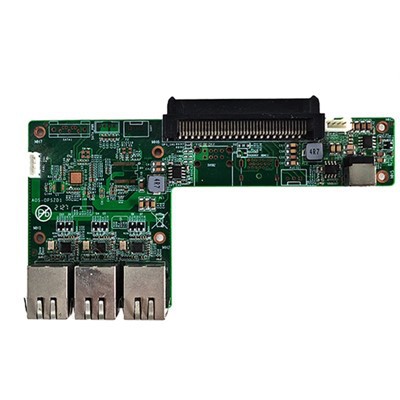
First things first, let's talk about what an I7 Ops Computer is. The "I7" refers to Intel's Core i7 processor series, which is known for its high performance and multi - core capabilities. "Ops" stands for Open Pluggable Specification. An OPS computer is a standardized, small - form - factor computer module that can be easily plugged into compatible displays, like digital signage, meeting boards, and touchable TVs.
Now, the processor speed of an I7 Ops Computer can vary quite a bit. It depends on the specific model of the Core i7 processor used in the OPS unit. Intel has released several generations of Core i7 processors, and each generation and model within that generation have different clock speeds.
For example, some of the older Core i7 processors in an OPS computer might have a base clock speed of around 2.5 GHz. The base clock speed is the speed at which the processor runs under normal, non - overclocked conditions. But here's the cool part: many Core i7 processors support Turbo Boost technology. Turbo Boost allows the processor to increase its clock speed beyond the base speed when it needs to handle more demanding tasks. So, that same 2.5 GHz processor could potentially boost up to 3.5 GHz or even higher, depending on the workload and the specific model.
Newer generations of Core i7 processors in OPS computers can have even more impressive speeds. Some of the latest ones have base clock speeds starting at around 3.0 GHz and can turbo boost up to 5.0 GHz or more. These higher speeds mean that the computer can handle complex tasks much faster. Whether you're running multiple applications simultaneously, editing high - resolution videos, or using resource - intensive software for business meetings, a higher processor speed can make a huge difference in performance.
Let's take a look at some of the use cases where the processor speed of an I7 Ops Computer really matters. If you're using the OPS computer for a UHD OPS Computer for Meeting Board, having a fast processor is crucial. During a meeting, you might be sharing high - definition presentations, collaborating on real - time documents, and running video conferencing software all at the same time. A slow processor could lead to lag, freezing, or dropped frames, which can really disrupt the flow of the meeting. With a high - speed Core i7 processor, everything runs smoothly, and you can focus on the important business at hand.
Similarly, for an OPS Computer for Meeting Touchable TV, the processor speed affects the responsiveness of the touch screen and the overall user experience. When you're using the touch - screen functionality to interact with applications, draw on the screen, or navigate through menus, a fast processor ensures that your actions are registered immediately and there's no delay.
Another important aspect to consider is the motherboard. A Standard ATX Industrial Large Motherboard 2 DDR4 ATX Motherboards can play a role in how well the processor performs. The motherboard provides the electrical connections and pathways for the processor to communicate with other components in the computer, like the memory and storage. A high - quality motherboard with good power delivery and signal integrity can help the processor reach its full potential in terms of speed and performance.
Now, you might be wondering how to choose the right I7 Ops Computer based on processor speed. Well, it really depends on your specific needs. If you're a small business that mainly uses the computer for basic office tasks like word processing, email, and web browsing, a computer with a lower base clock speed might be sufficient. You can still benefit from Turbo Boost when you need a little extra power for occasional more demanding tasks.
On the other hand, if you're a large corporation or a creative agency that deals with high - end graphics, 3D modeling, or real - time data analysis, you'll want to go for an I7 Ops Computer with a higher base clock speed and a significant Turbo Boost capability.
When it comes to comparing different I7 Ops Computers, don't just look at the clock speed. You also need to consider other factors like the number of cores and threads. Core i7 processors usually have multiple cores, which means they can handle multiple tasks at the same time. More cores generally mean better multi - tasking performance. Threads are like virtual cores, and having more threads can also improve the processor's ability to handle concurrent tasks.
In addition to the processor speed, the amount of RAM and the type of storage also affect the overall performance of the I7 Ops Computer. A computer with more RAM can store more data temporarily, which can speed up the loading and running of applications. And a solid - state drive (SSD) is much faster than a traditional hard disk drive (HDD), so it can significantly reduce the boot time and the time it takes to access files.
So, if you're in the market for an I7 Ops Computer, take the time to evaluate your needs, consider the processor speed, the number of cores and threads, the amount of RAM, and the type of storage. It's all about finding the right balance for your specific requirements.
If you're interested in learning more about our I7 Ops Computers or have any questions about processor speed and how it relates to your needs, we're here to help. Whether you're a small business owner looking for an affordable yet powerful solution or a large enterprise in need of high - end performance, we can provide you with the right I7 Ops Computer. Just reach out to us, and we can start a conversation about your requirements and find the perfect fit for you.
In conclusion, the processor speed of an I7 Ops Computer is a key factor in its performance, but it's not the only one. By understanding how processor speed works, considering other components, and evaluating your own needs, you can make an informed decision when purchasing an I7 Ops Computer. And if you're ready to take the next step, we're here to assist you in your procurement process.
References


- Intel official documentation on Core i7 processors
- Industry reports on OPS computer technology and performance