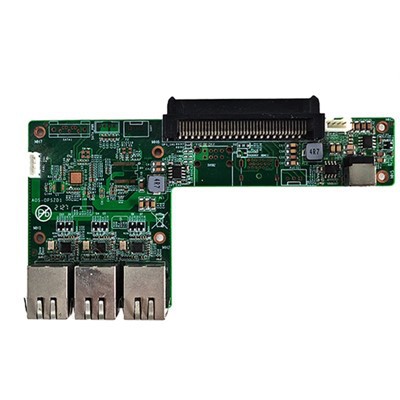
Hey there! I'm a supplier of Transfer Panel Additive OPS Computers, and I'm super stoked to share with you about the programming languages that can be used on these awesome machines.
First off, let's quickly understand what a Transfer Panel Additive OPS Computer is. It's a powerful piece of tech that can be used in a variety of industrial and commercial settings. Whether it's for a meeting board, a touch - screen display, or some other interactive application, these computers are up for the task.
Python
Python is like the Swiss Army knife of programming languages. It's super versatile and easy to learn, which makes it a top choice for many developers working on Transfer Panel Additive OPS Computers.
One of the main reasons Python is so great is its readability. The code is written in a way that's easy to understand, even for beginners. This means that if you're a small business or a startup looking to develop custom applications for your Transfer Panel Additive OPS Computer, Python can be a great starting point.
Python also has a huge library of pre - built modules. For example, if you're working on a data - driven application for your computer, you can use libraries like Pandas for data analysis and Matplotlib for data visualization. This saves a ton of development time and effort.
In the context of Transfer Panel Additive OPS Computers, Python can be used to create user interfaces. You can use frameworks like Tkinter or PyQt to build intuitive and interactive UIs. This is great for applications where users need to interact with the computer, such as in a meeting room setting. Check out our industrial windows pc which can run Python - based applications smoothly.
Java
Java is another popular programming language that can be used on Transfer Panel Additive OPS Computers. It's known for its "write once, run anywhere" principle. This means that once you've written a Java program, you can run it on any device that has a Java Virtual Machine (JVM) installed.
Java is a great choice for building enterprise - level applications. If you're a large corporation looking to develop a complex application for your Transfer Panel Additive OPS Computer, Java might be the way to go. It has strong security features, which are crucial when dealing with sensitive data.
For example, if you're using the computer for financial transactions or data management, Java's security mechanisms can help protect your data from unauthorized access. Java also has a large community of developers, which means you can find plenty of resources and support when you run into problems.
Our H110 Chipset OPS - C Touch Screen Computer is well - equipped to handle Java applications, thanks to its powerful processing capabilities.
C#
C# is a programming language developed by Microsoft. It's widely used in Windows - based applications, which makes it a natural fit for Transfer Panel Additive OPS Computers that run on Windows operating systems.
C# has a rich set of features for building graphical user interfaces. You can use the Windows Presentation Foundation (WPF) or Windows Forms to create visually appealing and user - friendly interfaces. This is great for applications where the user experience is a top priority.
C# also integrates well with other Microsoft technologies. For example, if you're using Microsoft SQL Server for your database, C# can easily interact with it. This makes it a great choice for building end - to - end solutions on Transfer Panel Additive OPS Computers.
JavaScript
JavaScript is the language of the web, but it's also becoming increasingly popular for developing desktop applications. With frameworks like Electron, you can use JavaScript to build cross - platform desktop applications that can run on Transfer Panel Additive OPS Computers.
JavaScript is great for creating interactive web - based interfaces. If you're looking to develop an application that has a web - like feel, JavaScript is the way to go. You can use libraries like React or Vue.js to build dynamic and responsive user interfaces.
Our RK3328 OPS Pluggable Industrial PC can run JavaScript - based applications, especially those developed with Electron, providing a seamless user experience.
Ruby
Ruby is a dynamic, object - oriented programming language. It's known for its simplicity and productivity. Ruby on Rails, a web application framework written in Ruby, is very popular for developing web - based applications.
If you're looking to develop a web - based application for your Transfer Panel Additive OPS Computer, Ruby on Rails can be a great choice. It follows the convention over configuration principle, which means you can get up and running quickly.
Ruby also has a great community, which provides support and resources for developers. You can find a lot of open - source libraries and plugins that can help you speed up your development process.
Conclusion
In conclusion, there are several programming languages that can be used on Transfer Panel Additive OPS Computers. Each language has its own strengths and weaknesses, and the choice depends on your specific requirements. Whether you're looking for ease of use, security, or the ability to build complex applications, there's a programming language out there for you.


If you're interested in purchasing a Transfer Panel Additive OPS Computer or have any questions about programming languages for these computers, feel free to reach out for a procurement discussion. We're here to help you find the best solution for your needs.
References
- Python official documentation
- Java official documentation
- C# official documentation
- JavaScript official documentation
- Ruby official documentation