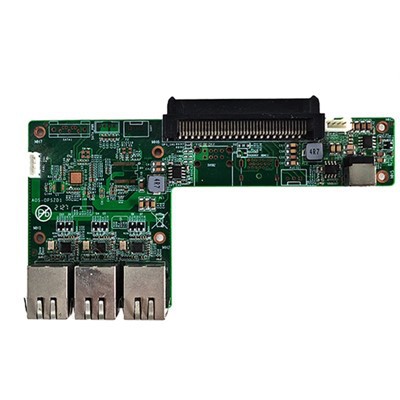
In the dynamic realm of digital technology, the demand for high - performance computing solutions is ever - escalating, especially in fields that require precision and high - quality output, such as photo editing. As a leading supplier of 4K OPS (Open Pluggable Specification) computers for touch panels, I often encounter inquiries regarding the suitability of our products for photo - editing tasks. In this blog, we will delve into the technical aspects, performance capabilities, and practical considerations to determine whether a 4K OPS computer for touch panels can indeed be used for photo editing.
Technical Specifications and Photo Editing Requirements
Photo editing is a resource - intensive process that demands a computer with robust hardware specifications. Key components such as the processor, graphics card, memory, and storage play crucial roles in determining the efficiency and quality of the editing experience.
Processor
The processor is the brain of the computer, responsible for executing instructions and performing calculations. For photo editing, a powerful processor can significantly reduce the time taken to load images, apply filters, and perform other computations. Our 4K OPS computers are equipped with a range of processors to meet different user needs. For instance, the Intel J6412 Processor MINI Computer 2COM Port 6USB Mini Computer offers a good balance of performance and energy efficiency. With its multi - core architecture, it can handle multiple tasks simultaneously, which is essential when working with large image files and complex editing operations.
Graphics Card
A high - quality graphics card is vital for photo editing as it is responsible for rendering images and displaying them on the screen. Our 4K OPS computers are designed to support 4K resolution, which provides sharp and detailed visuals. This high - resolution display is beneficial for photo editing as it allows users to see every detail of the image, making it easier to make precise adjustments. Some of our models, like the Celeron J5005 J4105 J4005 OPS Computer, come with integrated graphics that offer decent performance for basic to intermediate photo - editing tasks. For more advanced users who require real - time preview of complex effects and high - end rendering, we also offer models with dedicated graphics cards.
Memory
Sufficient memory (RAM) is necessary to store and access data quickly. When editing photos, large image files need to be loaded into memory, and additional memory is required for the editing software to run smoothly. Our 4K OPS computers can be configured with different amounts of RAM, depending on the user's requirements. Generally, for photo editing, we recommend at least 8GB of RAM, but for more professional and intensive editing work, 16GB or more may be preferable.
Storage
Fast and reliable storage is crucial for photo editing. Slow storage can lead to long loading times for images and projects. Our 4K OPS computers support both traditional hard disk drives (HDDs) and solid - state drives (SSDs). SSDs are the preferred choice for photo editing due to their much faster read and write speeds. They can significantly reduce the time it takes to open and save large image files, improving the overall workflow efficiency.
Performance in Real - World Photo - Editing Scenarios
To assess the practical suitability of our 4K OPS computers for photo editing, let's consider some common photo - editing scenarios.


Image Import and Organization
When importing a large number of photos from a camera or external storage device, a fast - performing computer is essential. Our 4K OPS computers, with their powerful processors and high - speed storage options, can quickly import and organize images. The touch - panel interface also makes it convenient to navigate through folders and select the images you want to edit.
Basic Editing Operations
Basic photo - editing operations such as cropping, resizing, and adjusting exposure and contrast can be performed smoothly on our 4K OPS computers. The high - resolution touch panel allows for precise control, making it easy to make accurate adjustments. For example, when using a touch - based photo - editing software, users can simply use their fingers to crop an image or adjust the sliders for exposure and contrast, providing a more intuitive and efficient editing experience.
Advanced Editing and Retouching
For more advanced photo - editing tasks such as retouching, color correction, and applying complex filters, the performance of the computer becomes even more critical. Our 4K OPS computers with dedicated graphics cards and high - end processors can handle these tasks effectively. The real - time preview feature allows users to see the changes they are making immediately, which is essential for achieving the desired results.
Batch Processing
Batch processing is a common requirement in photo editing, especially for photographers who need to process a large number of images with the same settings. Our 4K OPS computers can perform batch processing efficiently, thanks to their multi - core processors and sufficient memory. This can save a significant amount of time and effort, allowing photographers to focus on other aspects of their work.
Advantages of Using a 4K OPS Computer for Photo Editing
There are several advantages to using a 4K OPS computer for photo editing.
High - Resolution Display
The 4K resolution of our touch - panel displays provides a sharp and detailed view of the images, allowing for more precise editing. This high - quality display is particularly beneficial for tasks such as retouching and color correction, where small details can make a big difference.
Touch - Panel Interaction
The touch - panel interface offers a more intuitive and natural way of interacting with the photo - editing software. Instead of using a mouse and keyboard, users can directly use their fingers to perform various editing operations, which can improve the efficiency and creativity of the editing process.
Compact and Versatile Design
Our 4K OPS computers are designed to be compact and easy to install. They can be easily integrated into existing touch - panel displays, making them a versatile solution for photo - editing studios, photography classrooms, and other environments.
Energy Efficiency
In addition to performance, energy efficiency is also an important consideration. Our 4K OPS computers are designed to consume less power, reducing the overall operating costs and environmental impact.
Considerations and Limitations
While our 4K OPS computers offer many advantages for photo editing, there are also some considerations and limitations.
Software Compatibility
Not all photo - editing software may be fully optimized for touch - panel interaction. Some software may require a mouse and keyboard for certain functions, which may limit the benefits of the touch - panel interface. However, many modern photo - editing applications are becoming more touch - friendly, and we expect this trend to continue.
Cooling and Heat Dissipation
As photo editing can be a resource - intensive task, the computer may generate a significant amount of heat. Adequate cooling and heat dissipation are necessary to ensure the stable performance of the computer. Our 4K OPS computers are designed with efficient cooling systems to prevent overheating, but in some cases, additional cooling measures may be required.
Conclusion
In conclusion, a 4K OPS computer for touch panels can be a suitable choice for photo editing. With their powerful hardware specifications, high - resolution displays, and touch - panel interfaces, they offer a range of benefits for both amateur and professional photographers. Whether you are performing basic editing operations or more advanced retouching and batch processing, our 4K OPS computers can provide a reliable and efficient editing solution.
If you are interested in exploring our range of 4K OPS computers for photo editing or have any questions about our products, we encourage you to reach out to us for a detailed discussion. We are committed to providing high - quality products and excellent customer service, and we look forward to helping you find the perfect computing solution for your photo - editing needs.
References
- Adobe Systems Incorporated. (2023). Adobe Photoshop User Guide.
- Intel Corporation. (2023). Technical documentation for Intel processors.