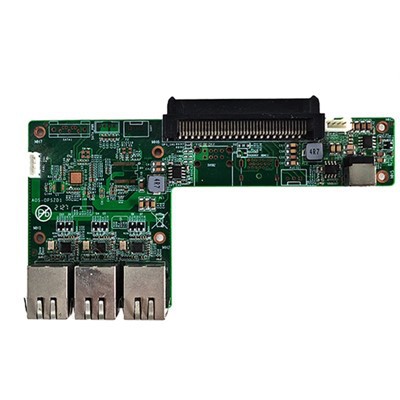
In the realm of computer - aided design (CAD), the choice of hardware is crucial. As a supplier of I3 OPS (Open Pluggable Specification) computers, I often encounter the question: Can an I3 OPS Computer run CAD software? In this blog, I'll delve into the technical aspects, performance capabilities, and limitations of using an I3 OPS computer for CAD applications.
Understanding I3 OPS Computers
First, let's clarify what an I3 OPS computer is. The OPS standard is a specification for a small, hot - swappable computer module that can be easily integrated into displays, kiosks, and other devices. The "I3" refers to Intel Core i3 processors, which are part of Intel's consumer - grade processor lineup. These processors are known for offering a balance between performance and energy efficiency, making them popular for general - purpose computing tasks such as web browsing, word processing, and multimedia playback.
Our I3 OPS computers come with various features that make them versatile. For example, we offer models like the IntelJ1900//J2900 CPU Small Computer 6 USB MINI Computers, which provide multiple USB ports for easy connection to external devices. These computers also support different operating systems, giving users the flexibility to choose the one that suits their needs best.
CAD Software Requirements
CAD software is used for creating, modifying, analyzing, and optimizing designs in various industries such as architecture, engineering, and manufacturing. Different CAD applications have different system requirements, but generally, they demand high - performance hardware to handle complex 2D and 3D models, precise calculations, and real - time rendering.
Some of the key requirements for running CAD software include:
- Processor Power: A fast and multi - core processor is essential for handling the complex algorithms and calculations involved in CAD. The ability to perform multiple tasks simultaneously, such as model editing and rendering, is crucial.
- Graphics Performance: CAD software often involves working with detailed 3D models, which require a powerful graphics processing unit (GPU) to provide smooth visualization and real - time feedback.
- Memory (RAM): Sufficient RAM is needed to store the design data, intermediate calculations, and the operating system. CAD projects can be memory - intensive, especially when dealing with large models.
- Storage: Fast storage, such as solid - state drives (SSDs), is preferred for quick loading of CAD files and saving changes efficiently.
Can an I3 OPS Computer Meet CAD Requirements?
Processor
Intel Core i3 processors typically come with dual - core or quad - core configurations. While they are capable of handling basic computing tasks, their performance may be limited when it comes to running CAD software, especially for complex 3D modeling. CAD applications often benefit from higher - core counts and higher clock speeds. However, for simple 2D CAD work, an I3 processor can be sufficient. For instance, if you are creating basic floor plans or simple mechanical parts, the processing power of an I3 OPS computer may be adequate.
Graphics
Most I3 processors come with integrated graphics. These integrated GPUs are designed for general - purpose graphics tasks such as displaying web pages and videos. While they can handle some basic 2D CAD work, they struggle with more advanced 3D CAD applications that require high - end graphics capabilities. For 3D modeling, sculpting, and rendering, a dedicated GPU is highly recommended. Our UHD OPS Computer for Meeting Board offers better graphics performance compared to standard I3 OPS models, but it may still not be on par with high - end CAD - specific workstations.
Memory
CAD software can be memory - hungry, and the amount of RAM in an I3 OPS computer can be a limiting factor. Most I3 OPS computers come with 4GB or 8GB of RAM, which may not be enough for large - scale CAD projects. To run CAD software smoothly, at least 16GB of RAM is recommended, especially for 3D work. Upgrading the RAM in an I3 OPS computer can improve its performance to some extent, but there may be limitations based on the motherboard's specifications. Our Standard ATX Industrial Large Motherboard 2 DDR4 ATX Motherboards support higher - capacity RAM, which can be a viable option for users looking to enhance their system's memory.


Storage
As mentioned earlier, fast storage is crucial for CAD work. Many I3 OPS computers come with traditional hard disk drives (HDDs), which are slower compared to SSDs. Loading large CAD files from an HDD can be time - consuming, and it can also affect the overall responsiveness of the software. Upgrading to an SSD can significantly improve the performance of an I3 OPS computer when running CAD software.
Use Cases Where an I3 OPS Computer Can Work for CAD
Despite the limitations, there are some scenarios where an I3 OPS computer can be used for CAD work:
- Entry - level CAD Learning: For students or beginners who are just starting to learn CAD software, an I3 OPS computer can be a cost - effective option. They can use it to learn the basics of 2D CAD, such as drafting simple shapes and creating basic designs.
- Simple 2D CAD Projects: If you are working on small - scale 2D CAD projects, such as creating logos, simple schematics, or basic illustrations, an I3 OPS computer can handle the workload.
- On - the - go CAD Work: The compact size and portability of I3 OPS computers make them suitable for users who need to do some quick CAD work while on the move. For example, an architect can use it to make minor adjustments to a design on - site.
Limitations and Considerations
- Long - term Scalability: As your CAD projects become more complex and your skills progress, an I3 OPS computer may not be able to keep up. You may need to invest in a more powerful workstation in the future.
- Rendering Times: For 3D CAD work, rendering times on an I3 OPS computer can be extremely long, which can be a significant drawback when you need to present your designs quickly.
- Software Compatibility: Some high - end CAD software may not be fully compatible with the hardware limitations of an I3 OPS computer, leading to performance issues or even software crashes.
Conclusion
In conclusion, while an I3 OPS computer can run some CAD software, its capabilities are limited, especially for complex 3D CAD work. However, for entry - level users, simple 2D projects, or on - the - go work, it can be a viable option. As a supplier of I3 OPS computers, we understand the diverse needs of our customers. We offer a range of products and solutions to help you make the most of your CAD work. Whether you are looking for a basic I3 OPS computer for learning or a more advanced system with upgraded components, we can assist you.
If you are interested in discussing your specific CAD requirements and exploring our I3 OPS computer options, we encourage you to reach out to us for a procurement discussion. We are committed to providing you with the best hardware solutions for your CAD projects.
References
- Intel Corporation. (2023). Intel Core i3 Processor Specifications.
- Various CAD software documentation for system requirements.