Hey there! As a supplier of OPS (Open Pluggable Specification) computers, I often get asked if these machines can be used for machine learning. Well, let's dive right into it and find out.
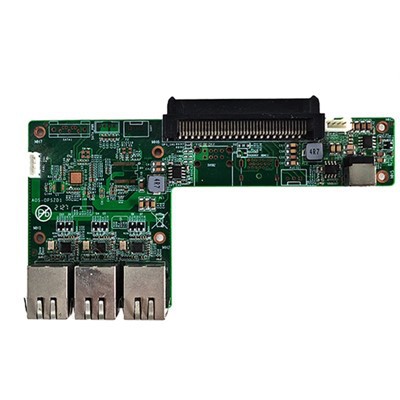
First off, what exactly is an OPS computer? OPS computers are compact, standardized, and hot - swappable PC modules that are commonly used in digital signage, interactive whiteboards, and other display - related applications. They're designed to be easily integrated into various devices, providing a convenient computing solution.
Now, when it comes to machine learning, we need to consider a few key factors: processing power, memory, and storage. Machine learning tasks typically involve a lot of data processing, training models, and running algorithms. So, how do OPS computers stack up in these areas?
Processing Power
The heart of any computer is its processor. In the world of machine learning, CPUs (Central Processing Units) and GPUs (Graphics Processing Units) play crucial roles. CPUs are great for general - purpose computing tasks, while GPUs are extremely efficient at handling parallel processing, which is essential for many machine - learning algorithms, especially deep learning.
Some of our OPS computers, like the Ops I5 Pc Module, come equipped with Intel Core i5 processors. These processors offer a decent amount of processing power for smaller - scale machine - learning projects. They can handle basic data preprocessing, running simple machine - learning models, and even some light - weight training tasks.


However, for more complex deep - learning tasks such as image recognition, natural language processing, and large - scale data analysis, a GPU is almost a necessity. There are OPS computers in the market that support discrete graphics cards. For example, the HM86 Discrete Graphics Electronic Whiteboard OPS Computer has the potential to be a great choice for machine learning. With a powerful GPU, it can significantly speed up the training process of neural networks, making it possible to work on more challenging machine - learning projects.
Memory
Memory is another critical aspect of machine learning. During the training and inference phases, machine - learning models need to store and access large amounts of data quickly. Insufficient memory can lead to slow performance or even crashes.
Most of our OPS computers offer options for different amounts of RAM. You can choose from 4GB, 8GB, or even 16GB of RAM depending on your specific needs. For small - scale machine - learning projects with limited datasets, 4GB or 8GB might be sufficient. But as your projects grow and the datasets become larger, you'll likely want to opt for 16GB or more.
Storage
Storage is important for storing datasets, machine - learning models, and other related files. There are two main types of storage in OPS computers: hard disk drives (HDDs) and solid - state drives (SSDs).
HDDs are cheaper and offer larger storage capacities, but they are slower compared to SSDs. SSDs, on the other hand, provide much faster read and write speeds, which can significantly reduce the time it takes to load datasets and save models.
For machine learning, especially when dealing with large datasets, an SSD is highly recommended. Many of our OPS computers, including the Transfer Panel Addtive OPS Computer, offer SSD options. This allows for quicker data access and a more seamless machine - learning experience.
Software Compatibility
In addition to hardware considerations, software compatibility is also crucial for machine learning. Most machine - learning frameworks, such as TensorFlow, PyTorch, and Scikit - learn, are designed to run on standard operating systems like Windows, Linux, and macOS.
Our OPS computers support a range of operating systems, so you can choose the one that best suits your machine - learning needs. Whether you're more comfortable with the user - friendly interface of Windows or the flexibility and open - source nature of Linux, you'll be able to install and run your favorite machine - learning frameworks without any major issues.
Advantages of Using OPS Computers for Machine Learning
One of the biggest advantages of using OPS computers for machine learning is their compact size. They're small and lightweight, which makes them easy to integrate into different setups. You can use them in a home office, a small research lab, or even in an industrial environment.
Another advantage is their cost - effectiveness. Compared to traditional desktop computers or servers, OPS computers are generally more affordable. This makes them a great option for startups, students, and small - scale research projects with limited budgets.
Limitations
Of course, OPS computers also have some limitations when it comes to machine learning. Their compact size means that they may not be able to accommodate the most powerful hardware components. For example, some high - end GPUs might be too large to fit into an OPS form factor.
Also, the cooling systems in OPS computers are designed for normal computing tasks. When running intensive machine - learning workloads, the components can generate a lot of heat, and the cooling system may not be sufficient to keep the temperatures in check. This can lead to performance throttling and potential hardware damage over time.
Conclusion
So, can OPS computers be used for machine learning? The answer is yes, but it depends on the scale and complexity of your projects. For small - scale machine - learning tasks, basic data analysis, and educational purposes, OPS computers can be a great choice. They offer a cost - effective and compact solution with sufficient processing power, memory, and storage options.
However, for large - scale, high - performance machine - learning projects, you may need to consider more powerful hardware solutions such as desktop computers or servers.
If you're interested in using OPS computers for your machine - learning projects, we'd love to have a chat with you. We can help you choose the right OPS computer based on your specific requirements and budget. Whether you're just starting out or looking to upgrade your existing setup, we're here to assist you. Reach out to us to start the procurement process and let's work together to make your machine - learning goals a reality.
References
- Goodfellow, I., Bengio, Y., & Courville, A. (2016). Deep Learning. MIT Press.
- Raschka, S., & Mirjalili, V. (2017). Python Machine Learning: Machine Learning and Deep Learning with Python, scikit - learn, and TensorFlow. Packt Publishing.