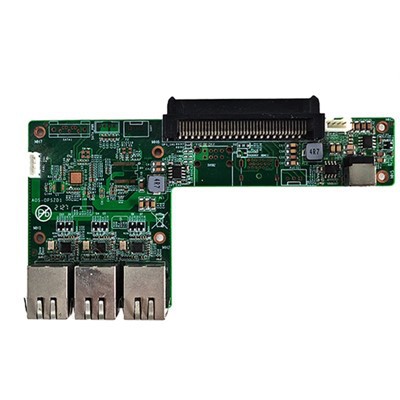
As a supplier of Transfer Panel Additive OPS Computers, I often encounter inquiries about the suitability of our products for virtual reality (VR) applications. This blog post aims to delve into this topic, exploring the technical capabilities of our Transfer Panel Additive OPS Computers and evaluating their potential for VR use.
Understanding Virtual Reality Requirements
Before assessing whether our Transfer Panel Additive OPS Computers can be used for VR applications, it's essential to understand the fundamental requirements of VR systems. VR technology immerses users in a simulated environment, creating a sense of presence and interaction. To achieve this, VR applications demand high - performance hardware capable of handling complex graphics, real - time rendering, and low - latency processing.
- Graphics Processing Power: VR experiences typically feature high - resolution, immersive visuals. A powerful graphics processing unit (GPU) is crucial to render these detailed scenes smoothly. For a comfortable VR experience, the GPU should be able to maintain a frame rate of at least 90 frames per second (fps) to reduce motion sickness and provide a seamless visual experience.
- CPU Performance: The central processing unit (CPU) plays a vital role in managing the overall system operations, physics calculations, and AI functions in VR applications. A multi - core CPU with high clock speeds can handle the demanding computational tasks efficiently, ensuring that the VR environment responds quickly to user input.
- Memory and Storage: Sufficient memory (RAM) and storage capacity are necessary to load and run VR applications. VR software often requires large amounts of memory to store textures, models, and other data. At the same time, fast storage (such as SSDs) can reduce loading times, enabling users to enter the VR environment more quickly.
- Latency: Low latency is critical in VR to ensure that the virtual environment accurately corresponds to the user's movements. Any delay between a user's action and the corresponding visual or auditory feedback can break the immersion and lead to a poor user experience.
Technical Specifications of Transfer Panel Additive OPS Computers
Our Transfer Panel Additive OPS Computers are designed with versatility and high performance in mind. They come with a range of component options that can be tailored to different user needs.
- CPU Options: We offer various CPU configurations, including those with high - end processors. For example, our Intel 12th Gen CPU OPS provides excellent multi - core performance, which is well - suited for handling the complex calculations required in VR applications. The 12th generation Intel CPUs offer advanced architectures and high clock speeds, enabling efficient processing of physics simulations, AI algorithms, and scene management in VR.
- GPU Support: Our computers can be equipped with different independent graphics cards, such as the Inteli3 - 8100 Processor Computer Independent Graphics Card GTX 730 2GB GTX 1050Ti 4GB GTX 2080 8GB Etc. The more powerful graphics cards, like the GTX 1050Ti and GTX 2080, have the ability to render high - resolution VR graphics with smooth frame rates. These GPUs are optimized for real - time rendering, which is essential for creating immersive VR experiences.
- Memory and Storage: The Transfer Panel Additive OPS Computers can be configured with ample RAM and fast storage solutions. High - speed DDR4 RAM can provide the necessary memory bandwidth for running large - scale VR applications, while SSDs ensure quick data access and reduced loading times.
- Connectivity: To support VR devices, our computers are equipped with a variety of connectivity options. They typically include USB ports for connecting VR controllers and sensors, as well as HDMI or DisplayPort outputs for connecting VR headsets. This allows for seamless integration with popular VR hardware on the market.
Evaluating the Suitability for VR Applications
Based on the technical specifications, our Transfer Panel Additive OPS Computers have several features that make them suitable for VR applications:
- High - Performance Components: The availability of powerful CPUs and GPUs means that our computers can handle the demanding computational requirements of VR. For instance, the combination of an Intel 12th Gen CPU and a high - end GPU like the GTX 2080 can provide smooth and immersive VR experiences, even for graphically intensive applications.
- Customizability: We understand that different VR applications may have different requirements. Our computers offer a high degree of customizability, allowing users to choose the components that best suit their specific VR needs. Whether it's for a simple VR training application or a complex VR gaming experience, users can configure the CPU, GPU, memory, and storage accordingly.
- Compact Design: The form factor of our Transfer Panel Additive OPS Computers is relatively compact. This makes them suitable for use in various settings, including VR arcades, educational institutions, and home setups, where space may be limited.
However, there are also some potential limitations:
- Heat Dissipation: High - performance VR applications can put a significant strain on the components, generating a large amount of heat. Our computers need to be designed with effective heat dissipation mechanisms to ensure stable performance over extended periods of use. Otherwise, overheating can lead to reduced performance and even hardware damage.
- Power Consumption: The powerful components in our computers also consume more power. This may be a concern in some environments, especially those with limited power supply or where energy efficiency is a priority.
Real - World Use Cases
In real - world scenarios, our Transfer Panel Additive OPS Computers have already found some applications in the VR field:


- VR Training: In industries such as aviation, healthcare, and manufacturing, VR training has become an important tool. Our computers can be used to power VR training simulations, providing trainees with realistic and immersive learning experiences. The high - performance components ensure accurate physics simulations and real - time feedback, enhancing the effectiveness of the training.
- VR Gaming: For VR gaming enthusiasts, our computers offer a viable option. The ability to handle high - resolution graphics and smooth frame rates allows gamers to enjoy a wide range of VR games, from action - packed shooters to immersive role - playing games.
Conclusion and Call to Action
In conclusion, our Transfer Panel Additive OPS Computers have the potential to be used for virtual reality applications. Their high - performance components, customizability, and compact design make them suitable for a variety of VR scenarios. However, it's important to consider the potential limitations such as heat dissipation and power consumption.
If you are interested in using our Transfer Panel Additive OPS Computers for your VR projects, we would be more than happy to discuss your specific requirements. Our team of experts can help you customize a solution that meets your needs and budget. Whether you are a VR developer, an arcade operator, or an individual enthusiast, we are here to provide you with the best - in - class products and services. Feel free to contact us to start the procurement and negotiation process.
References
- Intel Corporation. (2023). Intel 12th Gen Processor Product Specifications.
- NVIDIA Corporation. (2023). NVIDIA Graphics Card Technical Documentation.
- Virtual Reality Industry Association. (2023). Guidelines for VR Hardware Requirements.