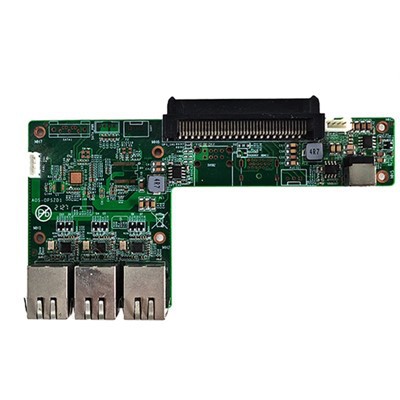
As a supplier of Transfer Panel Additive OPS (Open Pluggable Specification) Computers, I've encountered numerous inquiries regarding the multi - tasking capabilities of these devices. In this blog, I'll delve into the technical aspects and real - world applications to answer the question: Does the Transfer Panel Additive OPS Computer support multi - tasking?
Understanding Transfer Panel Additive OPS Computers
Before we discuss multi - tasking, let's first understand what Transfer Panel Additive OPS Computers are. These are compact, plug - and - play computers designed to be integrated with digital signage, interactive displays, and meeting boards. They offer a cost - effective and space - saving solution for enhancing the functionality of these displays.
The OPS standard itself provides a standardized interface for connecting the computer to the display, ensuring compatibility and easy installation. Transfer Panel Additive OPS Computers are often equipped with various processors, memory configurations, and storage options, which play a crucial role in determining their multi - tasking capabilities.


Technical Factors Affecting Multi - Tasking
Processor
The processor is the heart of any computer, and it significantly impacts multi - tasking performance. Modern Transfer Panel Additive OPS Computers are available with a range of processors, from entry - level to high - end options. For instance, our I3 6100U/I5 6200U/I7 6500U CPU MINI Computer 4GB DDR4 2133MHz Computer comes with Intel Core processors. These processors are multi - core, which means they can handle multiple threads simultaneously.
A multi - core processor divides the workload among its cores, allowing different tasks to run concurrently. For example, while one core can be handling video decoding for a live presentation on the display, another core can be running background processes such as system updates or network communication. Higher - end processors like the i7 series generally have more cores and higher clock speeds, enabling them to handle more complex and resource - intensive multi - tasking scenarios.
On the other hand, our N100 PC features an Intel N100 processor. This processor is designed for energy - efficiency and is suitable for lighter multi - tasking requirements. It can handle basic tasks like web browsing, document editing, and running small applications simultaneously without consuming too much power.
Memory (RAM)
Random Access Memory (RAM) is another critical factor in multi - tasking. When a computer runs multiple applications, each application requires a certain amount of memory to store data and instructions temporarily. If there isn't enough RAM, the computer will start swapping data between the RAM and the hard drive, which can significantly slow down the system.
Most Transfer Panel Additive OPS Computers come with at least 4GB of RAM, which is sufficient for basic multi - tasking. However, for more demanding tasks such as running multiple virtual machines or high - definition video editing, 8GB or even 16GB of RAM may be required. With more RAM, the computer can keep more applications and data in memory, reducing the need for frequent data swapping and allowing for smoother multi - tasking.
Storage
The type of storage device also affects multi - tasking performance. Traditional hard disk drives (HDDs) have mechanical components, which can be slower when it comes to accessing data. Solid - State Drives (SSDs), on the other hand, have no moving parts and offer much faster data transfer speeds.
When a computer is multi - tasking, it needs to access data from the storage device quickly. An SSD can read and write data much faster than an HDD, which means that applications can load and run more quickly. This is especially important when running multiple applications simultaneously, as it reduces the waiting time for each application to access the necessary data.
Real - World Multi - Tasking Scenarios
Digital Signage
In the context of digital signage, multi - tasking is essential. A Transfer Panel Additive OPS Computer may need to display multiple content streams simultaneously, such as videos, images, and live feeds. For example, in a shopping mall, a digital signage display connected to an OPS computer may be showing promotional videos on one part of the screen while displaying real - time news tickers on another part.
Our UHD OPS Computer for Meeting Board is well - suited for such scenarios. It can handle high - definition video playback while also running background processes to manage content updates and network connectivity. The multi - core processors and sufficient memory in these computers ensure that the different tasks run smoothly without any noticeable lag.
Interactive Meeting Boards
In a meeting room setting, an OPS computer connected to an interactive meeting board needs to support multi - tasking. It may need to run video conferencing software, display presentation slides, and allow participants to interact with the board using touch or pen input.
The ability to handle these tasks simultaneously is crucial for a productive meeting. The OPS computer should be able to switch between different applications quickly and ensure that there is no delay in the interaction. With the right combination of processor, memory, and storage, our Transfer Panel Additive OPS Computers can meet these requirements effectively.
Testing and Benchmarking
To ensure that our Transfer Panel Additive OPS Computers can support multi - tasking, we conduct extensive testing and benchmarking. We use industry - standard benchmarking tools to measure the performance of the computers under different multi - tasking scenarios.
For example, we test the computer's ability to run multiple applications such as a web browser, a video player, and a document editor simultaneously. We measure factors like response time, frame rate, and overall system stability. Based on the test results, we can fine - tune the hardware configurations and software settings to optimize multi - tasking performance.
Conclusion
In conclusion, Transfer Panel Additive OPS Computers do support multi - tasking, but the extent of their multi - tasking capabilities depends on several factors, including the processor, memory, and storage. Our range of OPS computers, with different hardware configurations, can meet the multi - tasking needs of various applications, from basic digital signage to complex interactive meeting boards.
If you're interested in learning more about how our Transfer Panel Additive OPS Computers can support your multi - tasking requirements, or if you're looking to make a purchase, we'd love to hear from you. Feel free to reach out to us to start a procurement discussion.
References
- Intel Corporation. (2023). Intel Core Processor Family Product Specifications.
- Industry reports on digital signage and interactive display technologies.