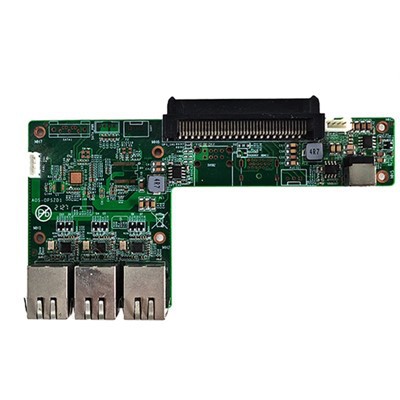
As a supplier of RK3288 Android OPS Computers, I often receive inquiries from customers about the device's performance under various environmental conditions. One of the most frequently asked questions is whether the RK3288 Android OPS Computer is resistant to dust. In this blog post, I will delve into this topic, providing a comprehensive analysis based on scientific knowledge and practical experience.
Understanding the RK3288 Android OPS Computer
Before discussing dust resistance, it's essential to understand what the RK3288 Android OPS Computer is. The RK3288 is a high - performance quad - core ARM Cortex - A17 processor, which powers the Android OPS (Open Pluggable Specification) Computer. This type of computer is widely used in digital signage, interactive kiosks, and other industrial applications due to its powerful computing capabilities and compatibility with the Android operating system.
How Dust Can Affect Computers
Dust can have several detrimental effects on computers. Firstly, dust accumulation on the internal components such as the CPU, GPU, and hard drive can act as an insulator. Heat is a major enemy of electronic components, and when dust prevents proper heat dissipation, the components can overheat. Overheating can lead to reduced performance, system instability, and even permanent damage to the hardware.


Secondly, dust particles can find their way into the fans and vents of the computer. Once inside, they can clog the fans, reducing their efficiency in cooling the system. A clogged fan has to work harder, which not only increases power consumption but also shortens the lifespan of the fan itself.
Dust Resistance Features of the RK3288 Android OPS Computer
-
Enclosure Design
The RK3288 Android OPS Computer is designed with a robust enclosure that plays a crucial role in dust resistance. The enclosure is made of high - quality materials that are tightly sealed to prevent dust from easily entering the internal components. The seams and joints are carefully engineered to minimize gaps through which dust could penetrate. -
Ventilation Optimization
The ventilation system of the RK3288 Android OPS Computer is designed to balance cooling efficiency and dust prevention. The vents are strategically placed and have fine - mesh filters. These filters are designed to trap large dust particles while allowing air to flow freely through the system. The fine - mesh structure is carefully calibrated to ensure that it does not significantly impede the airflow, which is essential for maintaining proper cooling. -
Internal Component Placement
Inside the RK3288 Android OPS Computer, the components are arranged in a way that reduces the risk of dust accumulation. Sensitive components are shielded or placed in areas where dust is less likely to settle. For example, the CPU and other heat - generating components are often placed in areas with good airflow, and they may be covered with heat sinks that also act as a barrier against dust.
Testing and Real - World Performance
We have conducted extensive testing on the RK3288 Android OPS Computer to evaluate its dust resistance. In laboratory settings, we exposed the computers to controlled dust environments with different dust densities and particle sizes. The results showed that the computer was able to maintain stable performance even after prolonged exposure to dust.
In real - world applications, the RK3288 Android OPS Computer has been deployed in various industrial and commercial settings, including factories, warehouses, and public areas. In these environments, where dust is a common problem, the computers have proven to be reliable. Users have reported minimal issues related to dust - induced malfunctions, which further validates the computer's dust - resistant design.
Comparison with Other Products
When compared to other similar products in the market, the RK3288 Android OPS Computer stands out in terms of dust resistance. Some competing products may have less effective enclosure designs or ventilation systems, which makes them more susceptible to dust accumulation. For example, some computers may have larger gaps in their enclosures or lack proper filters on their vents, allowing dust to enter more easily.
In contrast, our RK3288 Android OPS Computer's focus on dust - resistant design ensures that it can operate effectively in dusty environments for an extended period. This reliability is a significant advantage for customers who need their computers to function without interruption in challenging conditions.
Other Related Products
In addition to the RK3288 Android OPS Computer, we also offer other high - quality products. For instance, the RK3399A Touch Panel Android Motherboard is a powerful option for those who require a touch - enabled solution. It is designed with similar attention to detail in terms of durability and performance.
The ARM Chip Industrial Iot Gateway Internet Of Things Gateway Computer Embedded Computer is another product in our portfolio. It is suitable for industrial IoT applications and is built to withstand harsh environmental conditions, including dust.
And the HM86 Discrete Graphics Electronic Whiteboard OPS Computer is ideal for educational and commercial display applications, with features that ensure reliable performance even in dusty environments.
Conclusion and Call to Action
In conclusion, the RK3288 Android OPS Computer is indeed resistant to dust. Its well - designed enclosure, optimized ventilation system, and strategic component placement all contribute to its ability to operate effectively in dusty environments. Whether you are in the industrial, commercial, or educational sector, our RK3288 Android OPS Computer can provide you with a reliable and durable computing solution.
If you are interested in learning more about our RK3288 Android OPS Computer or any of our other products, please feel free to contact us for procurement and further discussions. We are committed to providing you with the best products and services to meet your computing needs.
References
- "Computer Hardware: Principles and Practice" by Andrew S. Tanenbaum
- "Industrial Electronics Handbook" edited by Lakshmi C. Jain