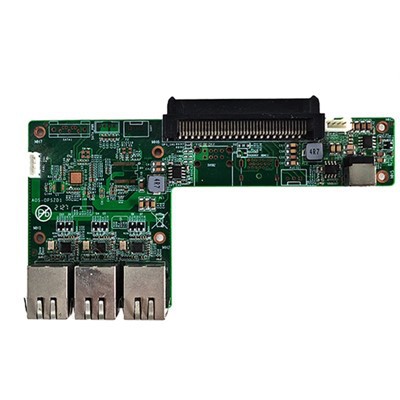
Hey there! As a supplier of OPS computers for meeting touchable TVs, I'm super stoked to chat about the processing power of these bad boys. So, what exactly is the deal with the processing power of OPS computers for meeting touchable TVs? Let's dive right in.
First off, let's understand what an OPS computer is. OPS stands for Open Pluggable Specification. It's a standardized computer module that can be easily plugged into a compatible touchable TV, turning it into a powerful interactive device for meetings. The processing power of an OPS computer is crucial as it determines how smoothly the touchable TV will perform during meetings, handling tasks like running presentation software, video conferencing, and multi - touch interactions.
One of the key factors affecting the processing power is the CPU. Modern OPS computers come with a variety of CPUs, from entry - level ones to high - end processors. For example, the H310 8Th 9Th Generation CORE OPS Computer is equipped with 8th or 9th generation Core processors. These processors are known for their excellent performance in multi - threaded tasks. They can handle multiple applications running simultaneously without a hitch. Whether you're presenting a complex PowerPoint with high - resolution images and animations, or participating in a video conference while taking notes on a digital whiteboard, these processors can keep up.
The number of cores and threads in a CPU plays a huge role in processing power. A multi - core CPU can divide tasks among different cores, allowing for parallel processing. This means that the computer can handle multiple operations at the same time, resulting in faster and more efficient performance. For instance, a quad - core CPU can handle four tasks simultaneously, while an octa - core CPU can handle eight. This is especially important in a meeting setting where you might have a presentation software, a video conferencing tool, and a file - sharing application all running at once.
Another aspect is the clock speed of the CPU. The clock speed, measured in gigahertz (GHz), determines how many instructions the CPU can execute per second. A higher clock speed generally means faster processing. However, it's not the only factor. A CPU with a lower clock speed but more cores might still outperform a single - core CPU with a high clock speed when it comes to multi - tasking.
Memory also has a significant impact on the processing power of an OPS computer. Random Access Memory (RAM) is where the computer stores data that it's currently working on. The more RAM an OPS computer has, the more data it can store and access quickly. For meeting touchable TVs, having at least 8GB of RAM is recommended. This allows for smooth operation of multiple applications and ensures that there's no lag when switching between tasks. If you're dealing with large files, such as high - definition videos or complex 3D models, 16GB or even 32GB of RAM might be necessary.


Storage is another consideration. Traditional hard disk drives (HDDs) are slower compared to solid - state drives (SSDs). An OPS computer with an SSD will boot up faster, load applications quicker, and transfer data more rapidly. This is essential for a seamless meeting experience. For example, if you need to quickly access a large presentation file during a meeting, an SSD will get it up and running in no time.
Let's talk about graphics processing. In a meeting touchable TV setup, you might be displaying high - resolution images, videos, or even 3D models. A dedicated graphics card can significantly enhance the visual experience. It can handle the rendering of complex graphics, ensuring that everything looks sharp and clear. Some OPS computers, like the Transfer Panel Addtive OPS Computer, are designed to support high - end graphics cards, which is great for businesses that rely on visual presentations.
The operating system also affects the processing power. Windows is a popular choice for OPS computers as it offers a wide range of software compatibility. However, it can be resource - intensive. Linux, on the other hand, is known for its efficiency and stability. It can run smoothly on less powerful hardware, making it a good option for budget - conscious businesses.
Now, let's consider the cooling system. A good cooling system is essential to maintain the processing power of an OPS computer. When a CPU or graphics card gets too hot, it can throttle its performance to prevent damage. This means that your meeting touchable TV might start to lag or slow down. A well - designed cooling system, with fans or heat pipes, can keep the components at a safe temperature, ensuring consistent performance.
The network connectivity of an OPS computer is also crucial. In a meeting, you might need to connect to the internet for video conferencing, cloud storage access, or sharing files. A fast and stable network connection, such as Gigabit Ethernet or Wi - Fi 6, can ensure that there are no interruptions during the meeting.
In terms of expandability, some OPS computers offer the ability to add more components in the future. This is great if your business grows and you need to upgrade the processing power. For example, you might be able to add more RAM or a better graphics card to an existing OPS computer.
So, why should you choose our OPS computers for your meeting touchable TVs? Well, we offer a wide range of options to suit different needs and budgets. Whether you're a small startup looking for an affordable yet reliable solution, or a large corporation in need of high - end performance, we've got you covered. Our Intel 4 - 5 Generation CPU 3.5 - inch Industrial Motherboard is a great choice for those on a budget who still want decent processing power.
If you're in the market for an OPS computer for your meeting touchable TV, don't hesitate to reach out. We can help you find the perfect solution based on your specific requirements. Whether it's the processing power, storage, graphics, or any other aspect, we'll work with you to ensure that you get the best value for your money. So, let's start a conversation and take your meeting experience to the next level.
References
- Intel Corporation. (2023). Intel Core Processor Family Overview.
- Microsoft. (2023). Windows Operating System Performance Guide.