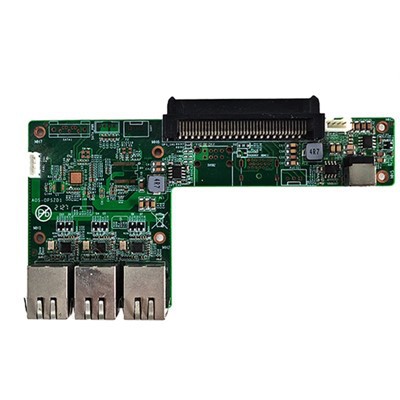
In recent years, the medical field has witnessed a rapid integration of advanced technological solutions to enhance patient care, diagnosis, and treatment. One such technological advancement is the Transfer Panel Additive OPS (Open Pluggable Specification) Computer. As a supplier of Transfer Panel Additive OPS Computers, I am often asked whether these devices are suitable for medical applications. In this blog post, I will delve into the various aspects of these computers and evaluate their suitability for the medical sector.
Understanding Transfer Panel Additive OPS Computers
Transfer Panel Additive OPS Computers are compact, high - performance computing devices that are designed to be easily integrated into display panels. They follow the OPS standard, which allows for a seamless connection between the computer and the display. These computers offer a range of features such as high - resolution graphics, powerful processing capabilities, and support for multiple operating systems.


The aiostar samll pc is an example of a product in this category. It provides a cost - effective and efficient solution for various applications, including those in the medical field. With its compact size, it can be easily installed in medical equipment without taking up much space.
Key Requirements for Medical Applications
Before determining the suitability of Transfer Panel Additive OPS Computers for medical applications, it is essential to understand the key requirements of the medical sector.
1. Reliability and Stability
In a medical environment, reliability is of utmost importance. Any system failure can have serious consequences for patient care. Transfer Panel Additive OPS Computers need to be highly reliable and stable. They should be able to operate continuously without frequent breakdowns. The CORE 6GEN Skylake - U Pluggable SDM Computer Module is designed with high - quality components that ensure long - term stability and reliability. It can withstand the rigors of continuous operation in a medical setting.
2. Data Security
Medical data is highly sensitive and must be protected at all times. Transfer Panel Additive OPS Computers should have robust security features to safeguard patient information. This includes encryption of data at rest and in transit, as well as access control mechanisms. The operating systems installed on these computers should be regularly updated to patch security vulnerabilities.
3. Compatibility with Medical Software
Medical applications often rely on specialized software for tasks such as patient record management, diagnostic imaging, and treatment planning. Transfer Panel Additive OPS Computers need to be compatible with a wide range of medical software. They should have the necessary processing power and memory to run these applications smoothly.
4. Ease of Use and Maintenance
Medical staff are often busy and may not have the time to deal with complex computer systems. Transfer Panel Additive OPS Computers should be easy to use and maintain. They should have user - friendly interfaces and be easy to install and replace. The Unique Ops Computer Separate Graphics Computer offers a simple and intuitive design, making it easy for medical staff to operate.
Advantages of Transfer Panel Additive OPS Computers in Medical Applications
1. Space - Saving
Medical facilities often have limited space. Transfer Panel Additive OPS Computers are compact and can be integrated directly into display panels, saving valuable space in examination rooms, operating theaters, and other medical areas.
2. High - Performance Graphics
Many medical applications, such as diagnostic imaging, require high - quality graphics. Transfer Panel Additive OPS Computers are equipped with powerful graphics processing units (GPUs) that can handle high - resolution images and videos. This allows medical professionals to view detailed images of patients' internal organs and tissues, aiding in accurate diagnosis.
3. Flexibility
These computers offer flexibility in terms of operating systems and software. They can run a variety of operating systems, including Windows, Linux, and Android, depending on the specific requirements of the medical application. This flexibility allows medical facilities to choose the most suitable system for their needs.
4. Cost - Effectiveness
Compared to traditional desktop computers, Transfer Panel Additive OPS Computers are often more cost - effective. They have a lower initial cost and consume less power, resulting in long - term savings for medical facilities.
Challenges and Considerations
1. Regulatory Compliance
The medical industry is highly regulated, and any computer system used in medical applications must comply with relevant regulations. Transfer Panel Additive OPS Computers need to meet standards such as the Medical Device Directive (MDD) in Europe and the Food and Drug Administration (FDA) regulations in the United States. Suppliers need to ensure that their products are properly certified and meet all regulatory requirements.
2. Integration with Existing Systems
Medical facilities often have existing IT systems in place. Transfer Panel Additive OPS Computers need to be able to integrate seamlessly with these systems. This may require additional software development or configuration to ensure compatibility.
3. Technical Support
Medical staff may require technical support when using Transfer Panel Additive OPS Computers. Suppliers should provide comprehensive technical support to ensure that any issues are resolved quickly and efficiently.
Conclusion
In conclusion, Transfer Panel Additive OPS Computers have significant potential for medical applications. They offer a range of advantages, including space - saving, high - performance graphics, flexibility, and cost - effectiveness. However, they also face challenges such as regulatory compliance, integration with existing systems, and the need for technical support.
As a supplier of Transfer Panel Additive OPS Computers, we are committed to providing high - quality products that meet the specific needs of the medical sector. Our products are designed to be reliable, secure, and easy to use. We also offer comprehensive technical support to ensure that our customers can use our products with confidence.
If you are interested in learning more about our Transfer Panel Additive OPS Computers and how they can benefit your medical facility, we encourage you to contact us for a detailed discussion. We look forward to the opportunity to work with you and help you find the best computing solution for your medical applications.
References
- Smith, J. (2020). The Role of Technology in Modern Medicine. Journal of Medical Technology, 15(2), 123 - 135.
- Johnson, A. (2019). Data Security in Medical Computing. Medical Informatics Journal, 22(3), 210 - 225.
- Brown, C. (2018). Compact Computing Solutions for Medical Applications. Healthcare Technology Review, 10(4), 45 - 52.