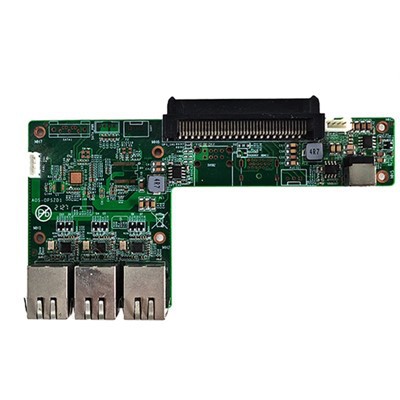
Hey there! As a supplier of Transfer Panel Addtive OPS Computers, I often get asked about the backup methods available for these nifty machines. In this blog post, I'm gonna break down the different backup options you can consider to keep your data safe and sound.
First off, let's understand why backups are so important. Transfer Panel Addtive OPS Computers are used in a variety of settings, from industrial environments to meeting rooms. They store crucial data like operational logs, user preferences, and important documents. Losing this data can be a real headache, leading to downtime, loss of productivity, and potential financial losses. So, having a reliable backup strategy is a must.
External Hard Drives
One of the most straightforward backup methods is using external hard drives. These are portable storage devices that you can connect to your Transfer Panel Addtive OPS Computer via USB or other interfaces. The process is pretty simple: just plug in the drive, select the files or folders you want to back up, and let the computer do its thing.
External hard drives come in different capacities, so you can choose one that suits your storage needs. They're also relatively inexpensive, making them a cost - effective backup solution. However, they do have some drawbacks. For example, if the drive gets damaged or lost, you could lose your backup data. Also, they require manual intervention for backups, which means you might forget to back up your data regularly.
Cloud Storage
Cloud storage has become increasingly popular in recent years, and for good reason. With cloud storage, your data is stored on remote servers maintained by a third - party provider. Services like Google Drive, Dropbox, and OneDrive offer easy - to - use interfaces that allow you to upload your files from your Transfer Panel Addtive OPS Computer with just a few clicks.
One of the biggest advantages of cloud storage is its accessibility. You can access your backed - up data from anywhere with an internet connection. It also provides an extra layer of security, as most cloud providers have robust security measures in place to protect your data. However, you do need to have a reliable internet connection to use cloud storage effectively. Also, there are usually limitations on storage space, and you might have to pay a subscription fee for larger storage capacities.
Network - Attached Storage (NAS)
NAS is a great option if you have multiple Transfer Panel Addtive OPS Computers or other devices that need to be backed up. A NAS device is a dedicated storage device that connects to your local network. All the computers on the network can access and store data on the NAS.


Setting up a NAS can be a bit more complicated than using an external hard drive or cloud storage, but it offers a lot of flexibility. You can configure different levels of access for different users, and you can even set up automated backups. NAS devices also provide high - speed data transfer, which is great for backing up large files quickly. However, they can be more expensive than external hard drives, and you need to have some technical knowledge to set them up and maintain them.
RAID Arrays
RAID (Redundant Array of Independent Disks) is a technology that combines multiple hard drives into a single logical unit. There are different RAID levels, each with its own characteristics and benefits. For example, RAID 1 provides mirroring, which means that the same data is stored on two or more drives. If one drive fails, you can still access your data from the other drive.
RAID arrays offer high levels of data redundancy and reliability. They're commonly used in enterprise environments where data loss can have serious consequences. However, they can be quite expensive to set up, especially if you're using high - end RAID levels. Also, they require some technical expertise to configure and manage.
Which Backup Method is Right for You?
The choice of backup method depends on several factors, such as your budget, storage needs, technical expertise, and the level of data security you require. If you're on a tight budget and have relatively small amounts of data to back up, an external hard drive might be the way to go. If you need easy access to your data from multiple locations and have a reliable internet connection, cloud storage could be a good option.
For businesses with multiple computers and a need for high - speed data transfer and advanced access control, a NAS device might be more suitable. And if you're dealing with critical data and need the highest level of redundancy, a RAID array could be the best choice.
Our Transfer Panel Addtive OPS Computers
At our company, we offer a range of Transfer Panel Addtive OPS Computers to meet different customer needs. For example, we have the Intel 4 - 5 Generation CPU 3.5 - inch Industrial Motherboard, which is a powerful and compact option for industrial applications. Our HM86 Discrete Graphics Electronic Whiteboard OPS Computer is great for use with electronic whiteboards, providing high - quality graphics and smooth performance. And if you're looking for a computer for meeting boards, our UHD OPS Computer for Meeting Board offers ultra - high - definition display and advanced features.
Contact Us for Purchase and Consultation
If you're interested in our Transfer Panel Addtive OPS Computers or need more information about backup methods, don't hesitate to get in touch with us. We're here to help you find the right solutions for your needs. Whether you're a small business or a large enterprise, we can work with you to ensure that your data is backed up safely and efficiently.
References
- "Data Backup and Recovery Handbook" by Andrew C. Hay
- "Cloud Computing: Concepts, Technology & Architecture" by Thomas Erl, Zaigham Mahmood, and Ricardo Puttini
- "RAID: The definitive guide" by Thomas A. Limoncelli